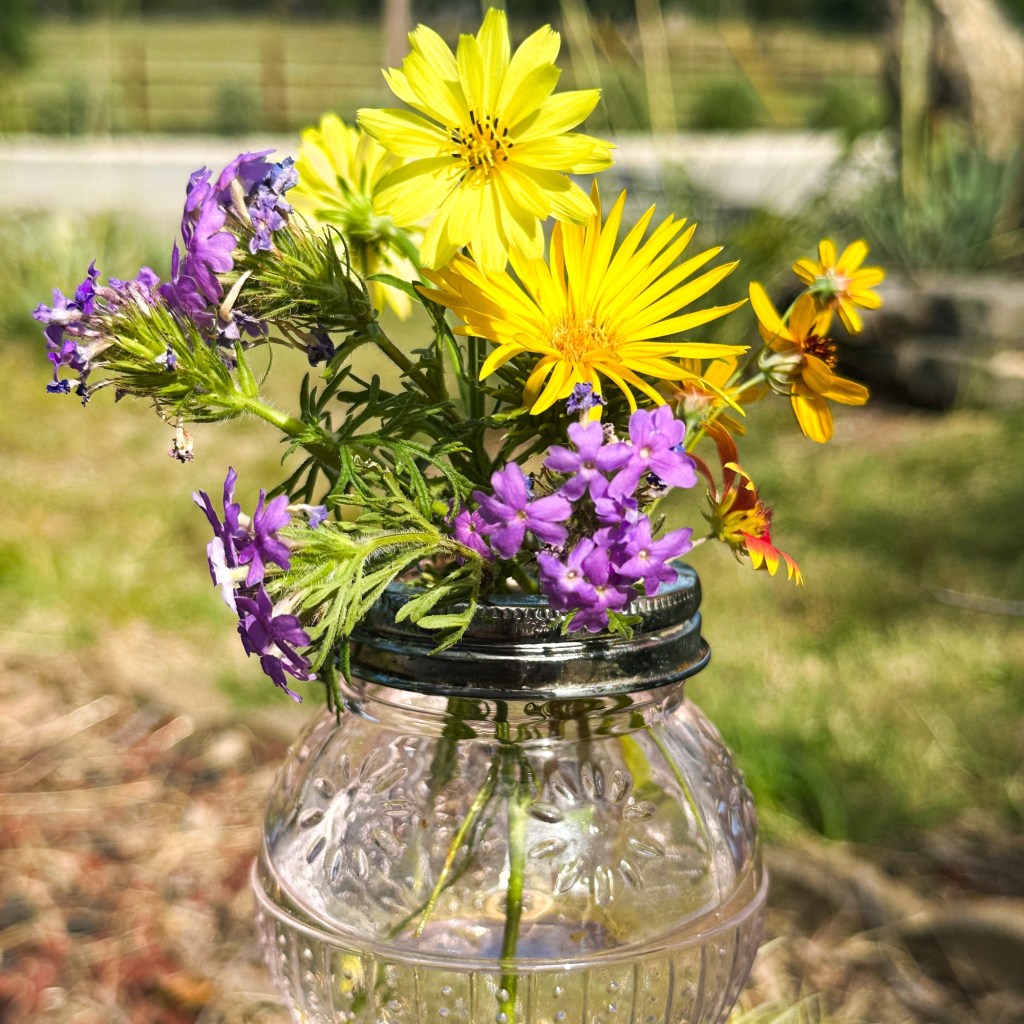
Summer has officially settled into Fort Worth, and with the heat comes a whole new wave of wildflowers. While the spring blossoms have mostly faded, the resilient bloomers of June and July are showing up strong — tough, sun-loving plants that know how to handle a Texas summer.
Armed with my camera and the Ranger, I’ve been zipping around the neighborhood and nearby roadsides, spotting everything from sticky gumweed to Texas bluebells. This post is a growing list of the wildflowers I’ve identified in early to mid-summer — including their names, unique features, habitats, and any helpful (or harmful) facts you’ll want to know.
Whether you’re a backyard explorer, a budding naturalist, or just wild about wildflowers, stay tuned as I keep adding new discoveries all summer long!

Texas Bluebells (Eustoma exaltatum)
• Description: Texas Bluebells are striking native wildflowers known for their bell-shaped blooms in shades of deep blue to purple. Their elegant petals and long stems make them stand out in prairies and fields across Texas.
• Habitat: These perennials thrive in moist meadows, prairies, and along streambanks. Though native to Texas and parts of the southern U.S., they’re becoming less common in the wild due to over-picking and habitat loss.
• Uses & Warnings: Texas Bluebells are often used in cut flower arrangements due to their long-lasting beauty. However, they are best enjoyed in the wild where they support pollinators. Wild harvesting is discouraged to help preserve native populations.

Curlycup Gumweed (Grindelia squarrosa)
• Description: A rugged, resinous wildflower with bright yellow, daisy-like blooms and distinctive curly bracts (the “curly cup”) beneath each flower head. Its sticky texture gives it the common name “gumweed.”
• Habitat: Found in prairies, roadsides, and disturbed areas across the central and western United States. It thrives in dry, open environments and poor soils, making it a tough, drought-resistant plant.
• Uses & Warnings: Historically used by Native American tribes and early settlers to treat respiratory issues, skin irritation, and poison ivy rashes. While it has traditional medicinal uses, gumweed can be toxic in large quantities and should be used with caution. Its sticky sap can also irritate sensitive skin.
This resilient Texas wildflower may not be the showiest in the bunch, but it’s full of character — and history!
If you’re looking for a fun way to show off your love for Texas wildflowers and country living, take a look at the Coast to Country “Just Piddlin’” Premium T-Shirt. Made from soft, breathable fabric, it’s perfect for summer days in the garden, out on the trail, or just enjoying a quiet morning on the porch. This floral-inspired tee is a comfortable way to carry a little bit of Texas nature with you, wherever you go.

Texas Thistle (Cirsium texanum)
• Description: A striking wildflower with tall, spiny stems and showy purple-pink blooms that resemble soft pincushions. Despite its thorny appearance, the flowers are soft and beloved by pollinators. The deeply lobed, gray-green leaves give it a rugged, unmistakable silhouette.
• Habitat: Native to Texas and parts of the southern U.S., Texas Thistle thrives in open fields, roadsides, pastures, and prairies. It prefers well-drained soil and full sun and is often found blooming from late spring into summer.
• Uses & Warnings: Texas Thistle is a pollinator magnet—especially for bees, butterflies, and even hummingbirds. It provides seeds for birds like goldfinches. Though its stems are spiny, it poses no threat unless handled directly. It’s an important native species and should not be confused with invasive, non-native thistles.
Bold, beneficial, and uniquely Texan, this wildflower proves that beauty can thrive even with a few thorns.
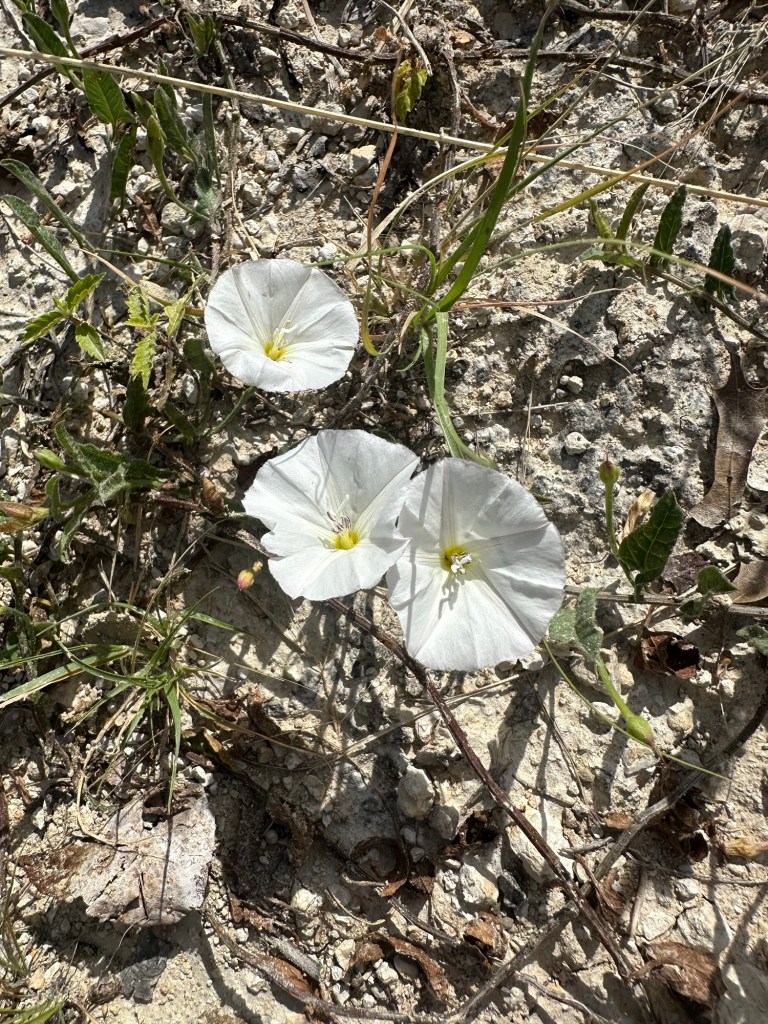
Texas Bindweed (Convolvulus equitans)
• Description: A native Texas vine with soft gray-green leaves and showy, funnel-shaped flowers in shades of white to pale pink, often with a darker throat. Its leaves are characteristically thick and somewhat arrow-shaped, with a slight fuzzy texture.
• Habitat: Found across central and western Texas in prairies, open fields, and along roadsides. It thrives in full sun and well-drained, sandy or rocky soils, making it well-adapted to the state’s dry conditions.
• Uses & Warnings: Unlike its invasive cousin Convolvulus arvensis (Field Bindweed), C. equitans is a native species that plays a role in local ecosystems by providing nectar to bees and butterflies. It is not considered harmful or overly aggressive, though like many vines, it can spread freely if not managed in a garden setting.
Texas Bindweed is a perfect example of a native wildflower that’s both resilient and beautiful — a subtle stunner in the summer landscape.

Engelmann Daisy (Engelmannia peristenia)
• Description: A cheerful perennial wildflower with bright yellow, daisy-like blooms and deeply lobed, gray-green leaves. Its flowers typically have 8 narrow petals surrounding a golden center, giving it a classic, sunny appearance.
• Habitat: Native to Texas and much of the central United States, Engelmann Daisy thrives in prairies, roadsides, pastures, and other open, sunny spaces. It tolerates poor soils and is drought-resistant — perfect for tough Texas summers.
• Uses & Warnings: A favorite of pollinators like bees and butterflies, this wildflower also provides forage for livestock and native wildlife. It’s often used in native landscaping and restoration projects due to its resilience and long bloom season. No known toxicity, making it safe to admire and beneficial to grow.
This bright and dependable bloomer is a Texas staple — quietly tough, wildly beautiful, and made for life under the big sky.
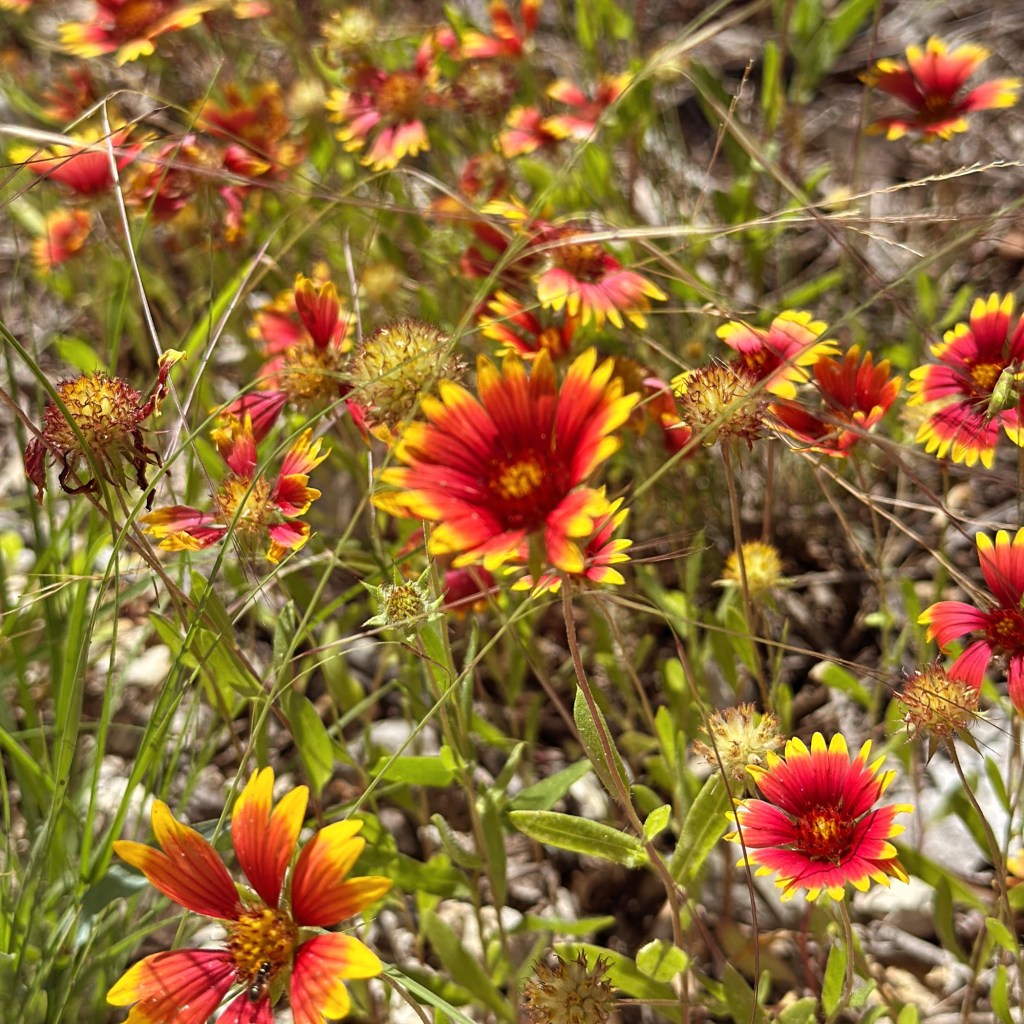
Blanket Flower (Gaillardia pulchella)
• Description: With fiery red and yellow petals that resemble a woven Native American blanket, Blanket Flower is one of Texas’s most eye-catching wildflowers. The daisy-like blooms have a central reddish disk and ray-like petals with fringed edges, giving them a vibrant, sunburst look.
• Habitat: Native to the southern and central U.S., including Texas, Blanket Flowers thrive in prairies, fields, and roadsides. They prefer full sun and well-drained soil, and they bloom from spring through fall—even during hot, dry stretches.
• Uses & Warnings: These hardy wildflowers attract bees, butterflies, and other pollinators, making them great additions to native gardens. They are deer-resistant and low-maintenance, though not typically used for culinary or medicinal purposes. No known toxicity, but they’re best left for the pollinators to enjoy.
Bold, bright, and built for the heat—Blanket Flowers bring a burst of color to any Texas landscape.
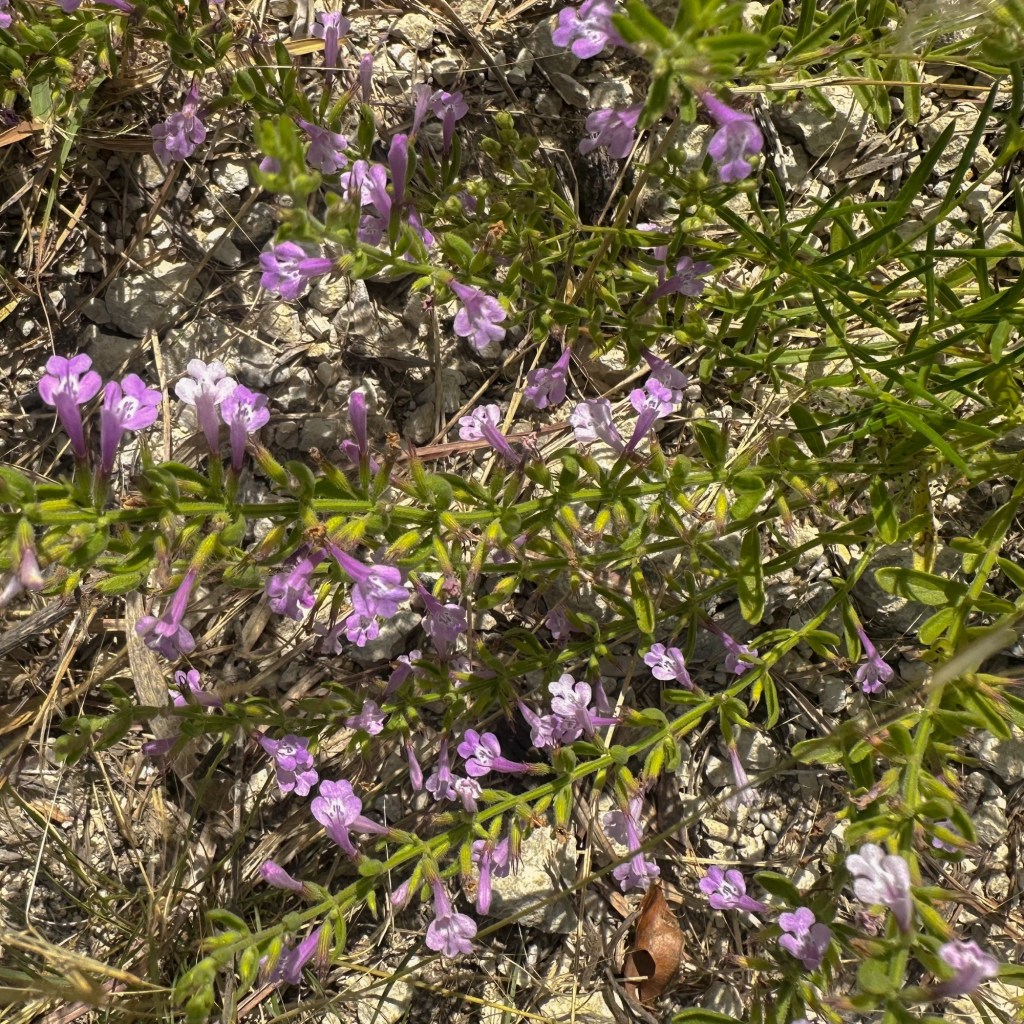
False Pennyroyal (Hedeoma acinoides)
• Description: A petite, aromatic wildflower with tiny lavender to bluish-purple blooms and slender, branching stems. Its small, mint-scented leaves give it the “pennyroyal” name, though it is not a true pennyroyal.
• Habitat: Native to Texas and much of the southern and central U.S., False Pennyroyal grows in dry, open habitats like prairies, sandy fields, and roadsides. It thrives in full sun and well-drained soils, blooming from spring into summer.
• Uses & Warnings: While not widely used today, members of the Hedeoma genus were historically brewed as herbal teas or used for their fragrance. However, some compounds found in similar plants can be toxic in large amounts, so it’s best appreciated for its beauty and pollinator value rather than for consumption.
💕 This one’s a personal favorite — the soft minty scent always stops me in my tracks and brings a little joy to my walks. Delicate but drought-tough, False Pennyroyal is a tiny powerhouse in the Texas wildflower world.
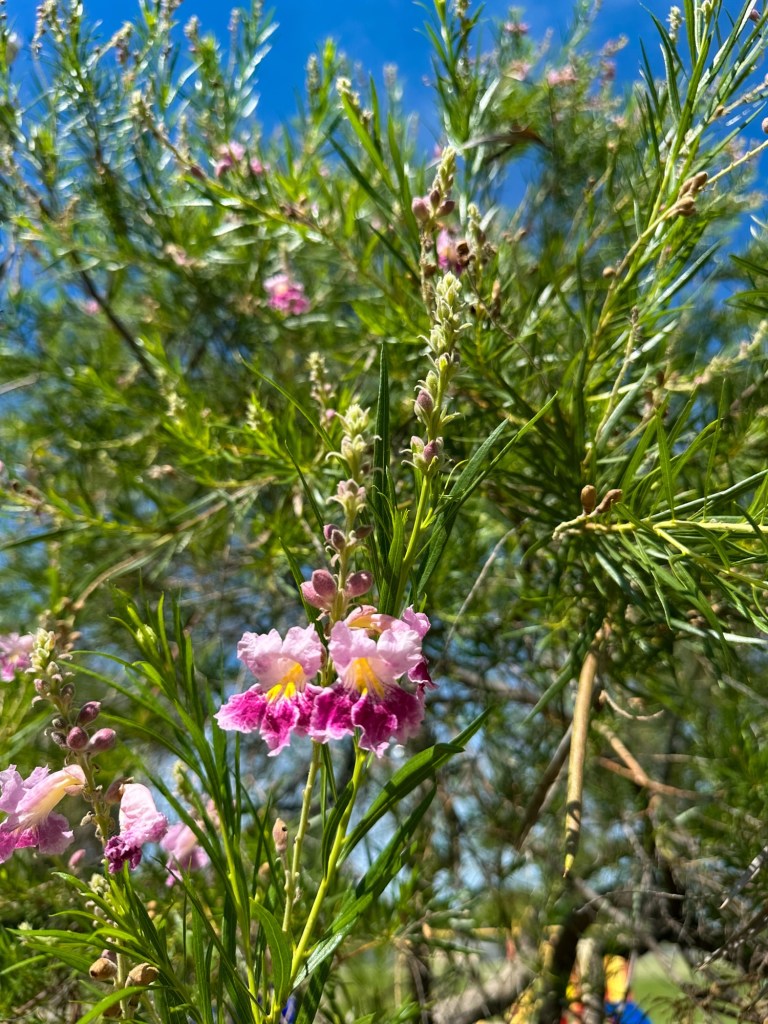
Desert Willow (Chilopsis linearis)
• Description: Despite its name, Desert Willow isn’t a true willow—it just looks like one. This small, ornamental tree boasts long, narrow leaves and trumpet-shaped flowers in shades of pink, lavender, or white. The blooms are fragrant, resembling those of catalpa or orchid trees, and they appear throughout late spring and summer.
• Habitat: Native to arid regions of Texas and the southwestern U.S., Desert Willow thrives in hot, dry climates and well-drained soils. It’s commonly found along dry creek beds, open fields, and rocky slopes, and it’s well suited to water-wise landscapes.
• Uses & Warnings: Highly valued for attracting bees, butterflies, and hummingbirds, this tree also makes a striking addition to native and xeriscape gardens. It’s low-maintenance, drought-tolerant, and deer-resistant. There are no major toxicity concerns, making it a great choice for family-friendly yards.
Graceful and tough, the Desert Willow is a perfect example of Texas beauty built for the summer heat — offering both charm and shade when it’s needed most.
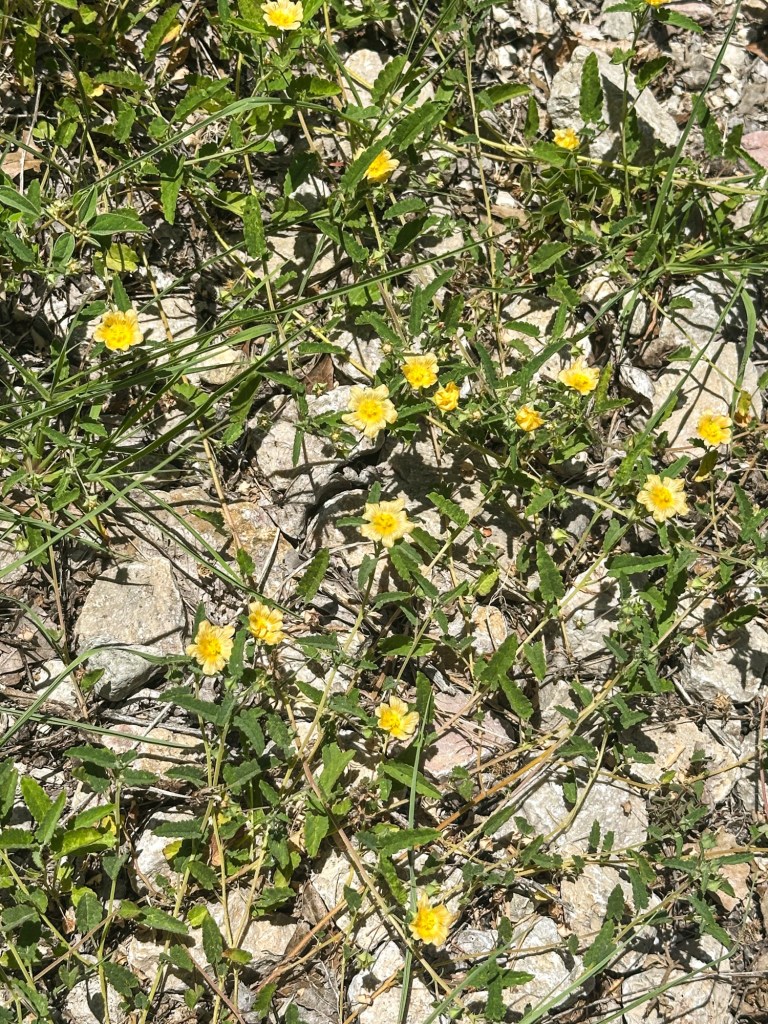
Spreading Sida (Sida abutifolia)
• Description: A low-growing, sun-loving wildflower with small, bright yellow blooms and fan-shaped petals. Its sprawling growth habit and fuzzy green leaves make it easy to spot along sunny paths and open fields.
• Habitat: Native to Texas and much of the southern U.S., Spreading Sida thrives in disturbed areas, dry soils, and roadside edges. It prefers full sun and is often found blooming through the heat of summer.
• Uses & Warnings: While not widely used in modern herbal practices, some species in the Sida genus have been explored for traditional medicinal uses. That said, Sida abutifolia is best admired in the wild, as it may become weedy in garden settings. No major toxicity is reported, but it’s not typically cultivated for consumption.
A heat-hardy little bloomer, Spreading Sida is another example of how even the smallest wildflowers hold their own in the Texas sun.
I’ll keep updating this post as more summer wildflowers pop up around the neighborhood — you never know what’ll bloom next in Texas! 🌼🌿
 Coast to Country
Leave a comment