Why I’m Starting a Garden
There’s something special about growing your own food, especially when it’s tailored to your lifestyle. My goal is to create a Texas salsa garden and grow edible plants for my tortoise. But gardening in Texas isn’t exactly easy—between the scorching sun, arid conditions, and our cement-like, cleechy white soil full of fossils, I knew I needed a different approach.
That’s why I’m starting small with two galvanized tubs in full sun, filled with soil that won’t pack down like concrete. This is the beginning of my journey toward a thriving, productive garden, and I’m excited to share it with you.
The Setup: Two Tubs to Start
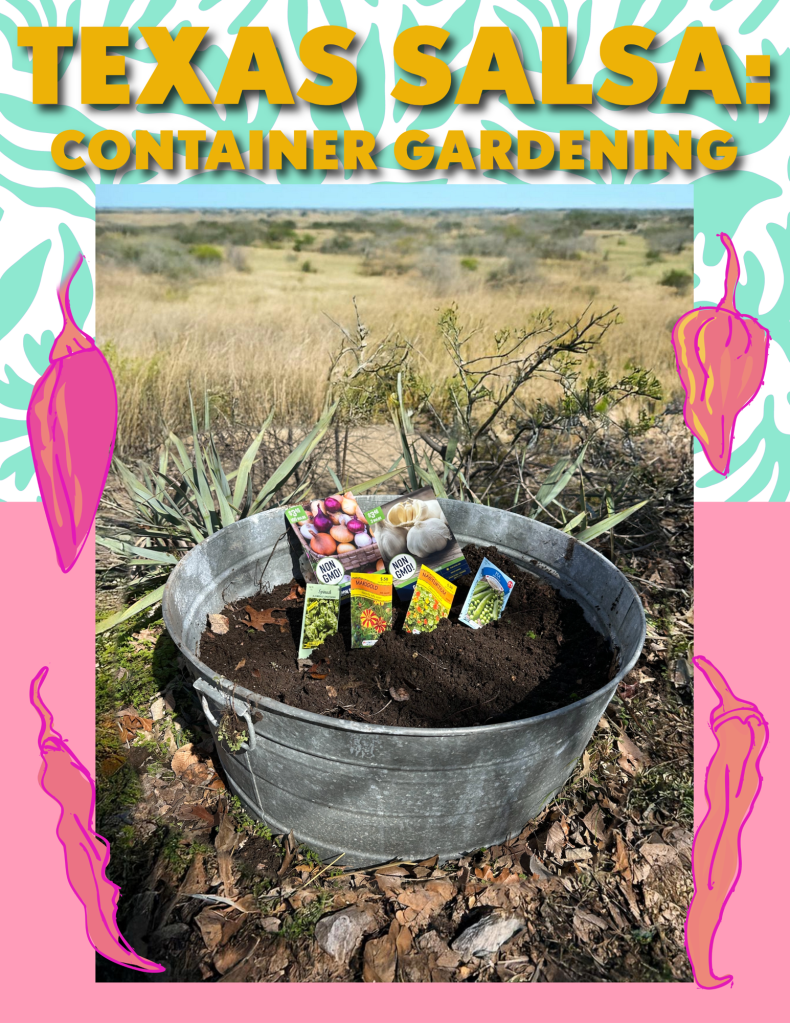
I cleared a small space near the edge of our property to set up these tubs. Since my yard is mostly full sun and can get dry and tough, I needed containers with good drainage. I chose galvanized tubs with holes drilled in the bottom to keep water from pooling.
What I’m Planting
Since I’m starting my garden in Texas at the beginning of March, I’m focusing on plants that can handle the early spring weather and will thrive through the summer. My salsa garden will include tomatoes, jalapeños, onions, and garlic—the core ingredients for fresh homemade salsa. To add a little extra heat, I’m also growing habaneros.
To keep my garden healthy and productive, I’m planting marigolds and nasturtiums as natural pest deterrents, while basil will help improve the flavor of my tomatoes. I’ll also be adding cilantro later in the season since it bolts quickly in the heat. Since my raised beds aren’t ready just yet, I’m getting started with two large tubs, planting spinach, peas, onions, and garlic in one, and tomatoes, jalapeños, echinacea, and evening primrose in the other. This will give me a head start while I finish setting up my full garden.
Once everything is in place, I’ll be adding green beans, summer squash, butternut squash, and even pumpkins for a well-rounded harvest & food for my tortoise. The goal is not just fresh salsa, but a thriving, companion-planted garden that makes the most of my space.
🌿 Tub 1 (Cool-Weather & Pest-Deterring Plants)
• Spinach – 4 to 6 seeds, spaced 3 inches apart
• Peas – 3 to 4 seeds along the edge with a small trellis
• Onions – 4 to 6 sets or seeds, spaced 3 inches apart
• Garlic – 3 cloves, spaced 4 inches apart
• Marigold – 1 to 2 plants (pest deterrent)
• Nasturtium – 2 to 3 seeds near the edges to trail down
🌶️ Tub 2 (Warm-Season Starters & Pollinators)
• Tomatoes – 1 plant in the center (start 2 seeds, keep the strongest)
• Jalapeños – 1 to 2 plants, spaced 6 inches apart
• Echinacea – 1 to 2 seeds (or one small transplant)
• Evening Primrose – 2 to 3 seeds near the edges
The Soil Struggle
One of the biggest challenges in my area is the hard-packed, caliche-heavy soil. It holds moisture when wet but dries out like a rock. Since digging through it isn’t ideal, raised beds and containers are the best solution.
For my tubs, I used a mix of:
- Quality potting soil for drainage.
- Compost for nutrients.
- Sand and organic matter to keep the soil light and airy.
When I build my raised beds, I’ll take a similar approach but on a larger scale.
Looking Ahead: Raised Beds & More Plants
While the tubs are my starting point, I’m also planning long rectangular raised beds in part shade. These will give me more space for veggies like tomatoes, peppers, and other salsa ingredients. I’m also growing echinacea and asparagus, which will eventually go into the raised beds since they’re long-term plants.
In future blog posts, I’ll share:
- How I build my raised beds (I already have the wood and corner stones).
- Tips for growing food in tough Texas conditions.
- Progress updates on my salsa garden and tortoise-friendly plants.
Final Thoughts
Starting a garden in Texas isn’t easy, but it’s totally possible—even with tough soil and intense sun. By starting small with containers, I’m learning what works before expanding to bigger raised beds. If you’re thinking about gardening but feel overwhelmed, just start with what you have!
Follow along as I keep building and growing. Next up: planning my raised beds!
 Coast to Country
Leave a comment